Successfully delivering a major Government digital project using agile methodologies

Public sector organisations face increasing pressure to deliver digital services that are efficient, accessible, and responsive to user needs. At the same time, they must navigate complex governance structures, legacy technology, policy constraints, and evolving stakeholder expectations. Successfully delivering large-scale digital transformation programmes requires more than technical capability. It requires a deep understanding of users, strong delivery disciplines, and the ability to align diverse teams around a shared vision.
This case study explores how our consultancy supported the successful delivery of a major government digital project through the application of Agile methodologies, user-centred design, and collaborative delivery practices. The project was delivered on time, within scope, and achieved measurable improvements for both service users and the organisation.
Project Overview
Our consultancy was engaged by a central government organisation responsible for delivering a high-volume public service used by hundreds of thousands of citizens annually. The organisation had recognised the need to modernise an ageing service that relied heavily on manual processes, fragmented systems, and operational workarounds that had accumulated over time.
The objective was clear: design and deliver a modern digital service that would improve the user experience, increase operational efficiency, and provide a more sustainable platform for future service development.
The programme involved replacing several legacy processes with a single integrated service while maintaining continuity for existing users. The work spanned discovery, alpha, beta, and live phases and involved multidisciplinary teams comprising policy specialists, operational staff, user researchers, service designers, business analysts, delivery managers, developers, architects, and senior stakeholders.
Our consultancy provided specialist expertise across business analysis, service design, user research, interaction design, and Agile delivery, working as an integrated part of the client’s delivery team throughout the programme lifecycle.

The Problem
Although the service fulfilled its core purpose, it had become increasingly difficult to maintain and evolve. Users often encountered confusing journeys, duplicated requests for information, and inconsistent experiences across channels. Internal teams faced significant administrative burdens as manual intervention was frequently required to complete transactions that should have been straightforward.
The organisation had limited visibility of end-to-end user journeys. Different parts of the service had evolved independently over several years, resulting in disconnected processes and varying interpretations of user needs. While stakeholders understood that improvement was required, there was no shared understanding of where the most significant problems existed or how they should be prioritised.
The complexity extended beyond technology. Multiple policy teams, operational functions, suppliers, and governance groups all had an interest in the service. Balancing these competing priorities while maintaining focus on user needs presented a significant delivery challenge.
The risks of inaction were considerable. User satisfaction was declining, operational costs continued to rise, and the organisation faced increasing pressure to meet modern digital service standards. A traditional delivery approach would have introduced substantial risk, particularly given the uncertainty surrounding user needs and the complexity of the existing service landscape.
“What stood out was how quickly the consultancy became part of the delivery team. Within weeks, they understood our service, our stakeholders, and the challenges we were facing. There was never a sense of an external supplier delivering work in isolation. They worked alongside us, challenged us constructively, and helped build confidence across the programme.”
Senior Responsible Owner
Research and Discovery
From the outset, we recognised that successful delivery would depend upon developing a deep understanding of both users and the wider service ecosystem. Rather than beginning with assumptions about solutions, the programme started with a comprehensive discovery phase focused on evidence gathering.
Our user researchers conducted extensive interviews with service users, operational staff, policy teams, and frontline support teams. These sessions explored not only how users interacted with the service but also the wider context surrounding their needs, behaviours, motivations, and frustrations.
Alongside qualitative research, we analysed existing service data, operational performance metrics, support requests, and completion rates. This enabled us to build a more complete picture of where users experienced friction and where organisational effort was being disproportionately consumed.
The discovery phase revealed several important insights. Many of the challenges users encountered were not isolated usability issues but symptoms of deeper service design problems. Information was often requested multiple times across different stages of the journey. Internal processes created unnecessary complexity for users. Operational teams frequently developed manual workarounds to compensate for limitations in underlying systems.
Through collaborative workshops and stakeholder engagement sessions, we established a shared understanding of the service landscape and aligned teams around a common view of the challenges.
Service mapping activities allowed us to visualise the end-to-end experience from both user and organisational perspectives. This proved particularly valuable in identifying hidden dependencies, duplicated processes, and opportunities for simplification.
The outputs from discovery became a critical foundation for subsequent delivery phases. Rather than relying on assumptions or stakeholder opinion, design and delivery decisions were grounded in evidence gathered directly from users and service teams.
“Knowledge transfer was embedded from day one rather than treated as a handover exercise at the end. Our teams were involved in workshops, backlog refinement, research playback sessions, and design activities throughout the project. When the engagement concluded, we had the skills, artefacts, and confidence to continue evolving the service independently.”
Digital Delivery Manager
Design Approach
The programme adopted an Agile delivery model from the beginning, allowing teams to work iteratively while continuously validating assumptions through research and testing.
A key principle throughout the engagement was maintaining close alignment between user needs, business objectives, and technical delivery. Rather than treating research, design, and development as separate activities, multidisciplinary teams worked together throughout each phase of the programme.
Our service designers translated research findings into actionable design opportunities, creating future-state service visions and prioritised improvement roadmaps. Business analysts worked closely with stakeholders to define requirements, manage dependencies, and ensure delivery activities remained aligned with organisational objectives.
User research remained central throughout the programme. Research did not end at discovery. New concepts, prototypes, and service improvements were tested continuously with users as designs evolved. This iterative approach reduced delivery risk and ensured that emerging solutions genuinely addressed user needs.
Interaction designers developed accessible, user-centred interfaces aligned with government design standards. Prototypes were tested regularly with representative users, allowing the team to identify and address issues before significant development effort was committed.
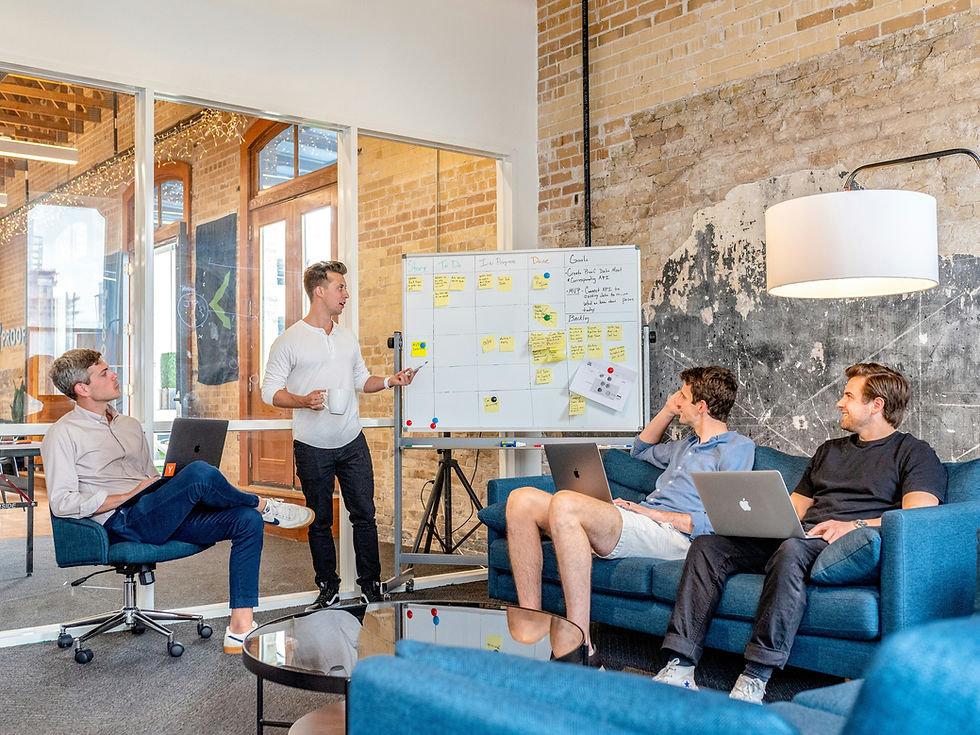
The Agile approach enabled delivery teams to release functionality incrementally, gather feedback, and adapt plans based on evidence. Sprint reviews, backlog refinement sessions, and collaborative planning activities ensured stakeholders remained engaged and informed throughout the programme.
One of the most significant benefits of this approach was the ability to manage complexity. Rather than attempting to design and deliver the entire solution upfront, the team focused on delivering value incrementally while continuously refining understanding of both user needs and technical constraints.
Strong collaboration between delivery, policy, operations, and technology teams was critical. By creating regular opportunities for shared decision-making and transparent prioritisation, the programme maintained momentum while avoiding many of the delays often associated with large government projects.
“The user research and service design capability they brought fundamentally changed how we approached decision-making. Every recommendation was grounded in evidence, and they made sure our own team was involved throughout the process. By the end of the programme, we weren’t just left with a better service—we had developed stronger internal capability and a much deeper understanding of our users.”
Head of Service Design
Outcome and Impact
The project successfully delivered a modern digital service within the agreed scope and timeline, providing substantial benefits for both users and the organisation.
Following implementation, service completion rates increased by approximately 28%, reflecting a significantly improved user experience. User satisfaction scores increased by over 30%, with users reporting greater confidence in completing transactions independently.
Operational efficiency improvements were equally significant. Automation of previously manual activities reduced processing effort by approximately 40%, allowing operational teams to focus on more complex and higher-value work. Support requests relating to common service issues decreased by 35%, reducing demand on customer support teams and improving overall service resilience.
The new service also provided greater visibility of user behaviour and service performance through enhanced reporting and analytics capabilities.
From an organisational perspective, the programme established a more sustainable delivery model. Teams gained greater confidence in using Agile delivery methods, user research practices, and service design techniques. These capabilities continued to generate value beyond the immediate scope of the project.
Importantly, the service was designed with future evolution in mind. Modern architecture, reusable components, and evidence-based delivery practices positioned the organisation to respond more effectively to future policy, technology, and user needs.
The project subsequently passed key service assessment milestones and became recognised internally as an example of effective user-centred digital delivery.
Reflection
Large government digital projects are rarely defined by technology alone. Their success depends upon understanding people, aligning stakeholders, and maintaining a relentless focus on outcomes rather than outputs.
What made this programme particularly successful was the integration of user research, service design, business analysis, and Agile delivery into a single coherent approach. User needs remained visible throughout the project, informing decisions at every stage rather than being treated as a one-off exercise.
The project reinforced a lesson we see repeatedly across public sector delivery: investing in understanding users early reduces risk later. Research and design are not separate activities from delivery; they are fundamental enablers of successful delivery.
By combining evidence-led decision-making with iterative Agile practices, the organisation was able to deliver meaningful improvements while managing complexity and maintaining confidence across stakeholders.
As government services continue to evolve, the ability to connect user insight, service design, and delivery execution will remain one of the most important factors in achieving successful outcomes. This project demonstrated that when these disciplines work together effectively, organisations can deliver services that are not only technically successful but genuinely valuable to the people who rely upon them.


Comments