Mastering Online GDS Compliance Assessment: Your Online GDS Compliance Guide

In today’s digital landscape, ensuring that government services meet the Government Digital Service (GDS) standards is essential. These standards guarantee that public sector websites and applications are accessible, user-friendly, and efficient. Mastering online GDS compliance assessment is not just about ticking boxes; it is about delivering services that truly serve the public effectively. In this guide, we will explore practical steps and insights to help teams confidently navigate the compliance process and achieve lasting digital transformation.
Understanding the Online GDS Compliance Guide
The GDS compliance framework sets out clear expectations for digital services in the UK public sector. It covers areas such as accessibility, usability, security, and performance. Following this guide ensures that services are inclusive and meet the needs of all users, including those with disabilities.
To start, it is important to understand the key principles behind GDS compliance:
User-centred design: Services must be designed with the user in mind, focusing on simplicity and clarity.
Accessibility: Services should be accessible to everyone, regardless of ability or device.
Transparency: Clear communication about how services work and how data is used.
Security and privacy: Protecting user data and maintaining trust.
By adhering to these principles, public sector teams can create digital services that are not only compliant but also genuinely useful and trustworthy.

Key Steps in Mastering Online GDS Compliance Assessment
Achieving compliance requires a structured approach. Here are the essential steps to master the process:
Conduct a thorough audit
Begin by reviewing your current digital services against the GDS standards. Identify gaps in accessibility, content clarity, and technical performance.
Engage stakeholders early
Collaboration with content creators, developers, and user representatives ensures that compliance is integrated from the start.
Use automated and manual testing tools
Automated tools can quickly identify common issues, but manual testing is crucial for understanding real user experience.
Implement iterative improvements
Compliance is not a one-time task. Regular updates and refinements help maintain standards as services evolve.
Document your compliance journey
Keep clear records of assessments, decisions, and changes. This documentation supports transparency and accountability.
By following these steps, teams can confidently move towards full compliance and improved service delivery.
How to test for WCAG compliance?
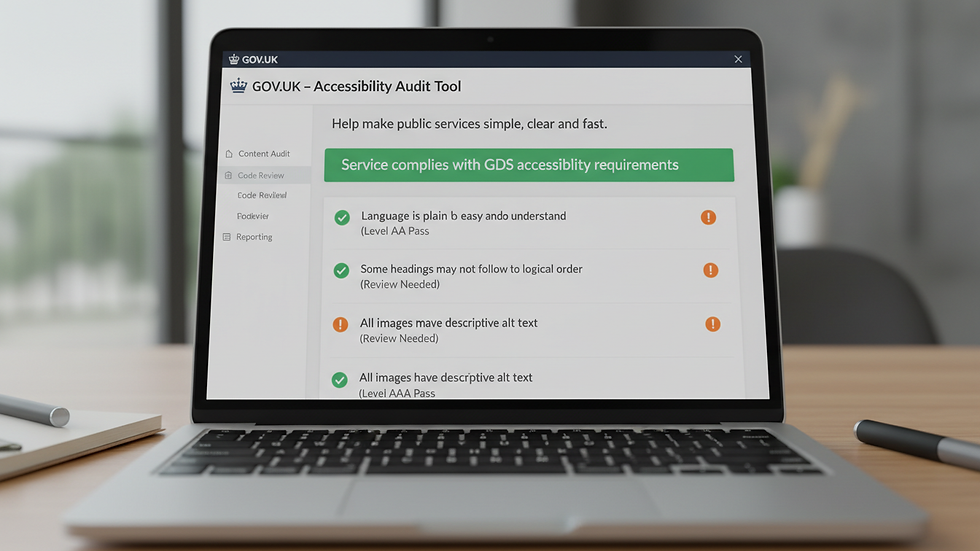
The Web Content Accessibility Guidelines (WCAG) form a core part of GDS standards, focusing on making web content more accessible. Testing for WCAG compliance involves several practical methods:
Automated testing tools: Tools like WAVE, Axe, or Lighthouse can scan pages for common accessibility issues such as missing alt text or colour contrast problems.
Keyboard navigation testing: Ensure that all interactive elements can be accessed and used via keyboard alone, which is vital for users with mobility impairments.
Screen reader testing: Use screen readers like NVDA or VoiceOver to experience your service as a visually impaired user would.
User testing with diverse participants: Involve people with disabilities in testing to uncover real-world challenges that automated tools might miss.
Each of these methods provides valuable insights. Combining them offers a comprehensive view of accessibility compliance and highlights areas for improvement.
Practical Tips for Effective GDS Compliance Assessment
To make the compliance process smoother and more effective, consider these actionable recommendations:
Start early in the project lifecycle
Integrate compliance checks from the design phase to avoid costly fixes later.
Train your team regularly
Keep everyone updated on the latest GDS standards and accessibility best practices.
Prioritise user feedback
Collect and act on feedback from real users to ensure services meet their needs.
Use clear, simple language
Avoid jargon and complex terms to make content accessible to all users.
Leverage existing resources
The GDS website offers extensive guidance and tools that can support your compliance efforts.
By embedding these practices into your workflow, you can build services that are both compliant and user-friendly.
The Role of Technology in GDS Compliance
Technology plays a crucial role in achieving and maintaining GDS compliance. Modern tools and platforms can automate many aspects of the assessment process, making it more efficient and reliable.
For example, continuous integration pipelines can include automated accessibility tests that run whenever code is updated. This approach helps catch issues early and keeps the service compliant throughout development.
Additionally, content management systems (CMS) that support accessibility features can simplify the creation of compliant content. Choosing the right technology stack aligned with GDS standards is a strategic decision that pays off in the long run.
We can also leverage cloud-based solutions for scalability and security, ensuring that services remain robust and trustworthy.
Moving Forward with Confidence
Mastering online GDS compliance assessment is a journey that requires commitment, collaboration, and continuous learning. By following the steps outlined in this online GDS compliance guide, teams can build digital services that meet the highest standards of accessibility, usability, and security.
Remember, compliance is not just about meeting requirements; it is about delivering value to the public through efficient and inclusive digital services. For those looking to streamline their process, tools and resources for gds compliance assessment online offer practical support and guidance.
Together, we can modernise public sector services, ensuring they are fit for the future and accessible to all.


Comments